Showing posts with label Explanations. Show all posts

Wednesday, July 26, 2017

Heroes of the Storm - Basic Drafting Guide to Hero League


So I've been playing Hero League for a while now, but always only within the first 10 placement matches. However, during the last season, my rank dropped really low so as soon as I was done with my placement matches, I kept playing Hero League, despite the long wait times, despite the toxicity and forced hero selections. And I kept losing. I kept losing because of bad hero picks and bad team compositions, very rarely do I lose due to poor matchups with players too far below or above my rank. As you can imagine, one can only take so many losses.


At the same time, HGC (Heroes Global Championship) was going on so I watched a ton of games to see if I could draft better heroes and ban heroes properly. Which got me like this:


Me, watching team drafts in HGC

So after a few weeks of contemplating before sleep and discussions with my friend, I've come with some basic guidelines on how to start drafting if you wanna have some sort of success in Hero League. Also I hope people I have played with read this so that we can achieve victory better (because usually when I lose I only know why after the game is already over) as Heroes of the Storm is a team game.


This is the screen you'll see when you start Hero League

The heroes (or more specifically classes) you need in any draft and I mean ANY DRAFT is:
- 1 Main Warrior
- 1 Main Support
- 1 Sustained Damage

Exactly in that order as well,

The reason for this is you need a Main Warrior first and foremost because warriors allow you to do basically anything you need to do in game.


Main Warriors allow you to:
- Engage or Disengage
- Create a hindrance to enemies so your damage dealers can actually deal damage
- Lockdown or interrupt enemies for counterplay
- Protect the rest of your team like supports and assassins

The problem here is that not all Heroes in the Warrior category are actually Main Warriors. So here is where it gets tricky, because I could either give you a list of heroes to memorize as Main Warriors or I could explain to you what makes a Warrior a Main Warrior.

Main Warriors must be able to:
- Take a large amount of damage meaning Large Health Pools
- Mitigate damage, ie, reducing damage or absorbing damage
- Crowd control (CC), ie, displace, stun, slow, trap or root a large number of units at one time
- and finally, Move around quickly or cover some distance quickly

From these main aspects, you can kind of have an idea of what heroes belong in the Main Warrior category. Some of the most popular Main Warriors are Muradin and ETC. Please note that Main Warriors must be able to do these things with their basic abilities, so if a Warrior Hero only completes these criterias after a Heroic Ability, that hero is not a Main Tank (until he gets his Heroics).


As for the Warriors that don't fit the criterias, they would most probably fit the Bruiser category. To elaborate, Bruisers trade off one or more of those aspects for more damage. Bruisers are important as well but should only be considered after you've planned those first 3 classes. They don't really fit a single role as some Bruisers can Solo Lane, some can act as a Side Support.

The next is a Main Support, and just like Warriors, some supports are not considered as Main Supports but rather they are split into Main Supports and Side Supports. Uther and Malfurion are the most popular Main Supports.


Main Supports must be able to:
- Heal a significant amount of health and not provide temporary health
- Provide some form of CC

Side Supports trade off some of these aspects by adding more CC, or damage.


And finally the string that ties all this together, the Sustained Damage Assassin. There are many types of Assassins but the Assassin with the damage type you need the most is Sustained Damage. Sustained Damage usually refers to Assassins that mostly rely on Auto Attacks for damage. Because Auto Attacks don't require any sort of resource to dish out, they are the most reliable in the hands of a good player and they can consistently deal damage no matter how long the team fight drags on. Hence the name, Sustained Damage. Raynor and Valla are good examples of Sustained Damage and the most important thing to know when using a Sustained Damage Hero is positioning (so you can deal damage safely) and stutter stepping (so you can deal damage while positioning). The easiest way to discern a Sustained Damage Assassin is the hero must be Ranged and they have High Attack Damage/ Attack Speed.


The other Assassins would either fall into the Burst Damage category (most mages are in this category), the Bruiser category (most melee assassins fall in this category) or the Backline category (assassins that can pressure the enemy backline).
If you want to learn just the basics quickly you can stop here, but I have a few more categories to go over and how they all come together to form a viable team composition.

Bruisers are heroes that have abilities similar to Main Warriors but they are not as disruptive as Main Tanks, most Bruisers have CC that affect only one hero and if they do, it is often displacements, slows and traps but not stuns or roots. However, the trade-off to this is that, they can deal more damage than Main Warriors and have ways to self-sustain through teamfights. Bruisers exist because they help take the pressure off of Main Tanks by tanking some of the damage themselves and then retreating to the backline whilst healing back up until they are needed again. Opponents cannot simply ignore them as they can do a sizeable amount of damage and they can tank some damage while regenerating health as well as the fight goes on. The main difference a Main Warrior has with Bruisers are that Main Warriors have a huge presence on the battlefield and are very disruptive whereas Bruisers can only disrupt one or two enemies.

Side Supports are Heroes that are able to slowly regenerate health over time or provide a significant amount of damage mitigation while simultaneously providing CC and damage to the team. Being Side Supports, they help to keep the team healthy through long fights or take the brunt of an attack, 
getting rid of burst damage.

And finally, we have Specialists.


Specialists are the hardest class to explain, but to put it simply, they fulfill some of the requirements of two or more classes. The difference Specialists have with Multi-Class Heroes are that while Multi-Class Heroes are similar at the start of a game to Specialists, Multi-Class must ultimately commit to one role at the end of the game whereas Specialists continue to fill the role of different classes until the end. Therefore, Specialists are best to pick if you have a very odd requirements to fill in your composition. Another attribute unique to most Specialists are their ability to pressure and push lanes really well. In fact, when left unchecked, they can destroy forts before Level 4.

One last thing I want to address is the role needed in Professional Games, the Solo Laner. I left this for last because unlike tournament games, most casual players don't play as pro players do. In tournament games, most games start off with 4 heroes pushing down a lane and 1 hero (the Solo Laner) pushing down another lane. The 4 heroes then proceed to rotate from one lane to the other while the Solo Laner stays on the last lane. The reason this is not common in casual games is because it requires a lot cooperation from all players to rotate at the same time and such. This arrangement acts as a sort of stalemate between teams as the 4 heroes can devastate a lane if the opposing team commits some heroes to take down the Solo Laner, which is a hero that has enough self-sustain to survive a gank from the opposing team. This stalemate goes away when huge rotations occur due to objectives and ganks which is when the teams try to create advantage in any game.


A Solo Laner is a hero with:
- Good waveclear
- Some form of self-sustain

Ok now you know what different classes of heroes provide to a team and the base composition required in any team. Now let's see how they fit in a team.

Starting with the 3 required hero classes:
- Main Warrior
- Main Support
- Sustained Damage


You can add a mage class to this composition, giving you more burst damage, in which case a hero with more lockdown would make this composition more effective, so adding another Warrior or Bruiser to the composition wouldn't hurt. Now you have a composition that has a lot of damage and quite a healthy frontline.


Or you could add a second support class to your team, making the whole team more survivable, meaning a team with 2 Assassins could work. Or you could play it safe and go for a Bruiser to ease some pressure from your Main Warrior.


Although this is the simplest way to introduce drafting to you, in Heroes of the Storm, there are more things to consider as well when drafting like map objectives and wave clear but it's something you'll learn overtime but at least you'll have a guideline to start with while at the same time considering those other aspects.

Good Luck!!

And as always, have fun playing HotS =D (Let's hope you don't almost burn out like I did because of Hero League)

INDEX
DPS - Damage per second or refers to a hero that supplies the damage to a team
Physical Damage - Damage dealt by auto attacks
Spell Damage - Damage dealt by spells (can also be called Ability Damage)
Percent Damage - Damage dealt equal to a percent of health
Burst - A large amount of damage dealt in a short amount of time to quickly take down a target

Self-Sustain - The ability to regenerate health by yourself

CC (Crowd Control) - The ability to displace, slow, trap, stun or root enemies
Displacement - Moving enemies against their will, during movement the affected is considered stunned
Slow - Having reduced movement speed
Stunned - Preventing movement and action to the affected
Root - Preventing movement or abilities related to movement but allowing action
Time Stop/ Stasis - Prevents movement and action but prevents damage to the affected
Trapped - Creating impassable terrain limiting movement
Silence - Prevents usage of spells and abilities by the affected for the duration

Damage Mitigation - The ability to reduce damage taken
Shields - Gains temporary health that is consumed first when taking damage, shown as white in health bar
Physical Armor - Reduces Physical Damage
Spell Armor - Reduce Spell or Ability Damage
Armor - Reduces all sources of damage except percent damage
Damage Reduction - Reduces all damage sources
Protected - Prevents all damage sources
Unstoppable - Prevents all CC except stasis
Invulnerable - Prevents all damage and CC

Gank - Using a numbers advantage to overwhelm and take the enemy by surprise
Lockdown - Keeping a target in place by means of chaining CC one after the other
Rotation - Moving across the map to engage objectives, lanes or targets
Wave Clear - The ability to clear minions quickly and effectively
Soaking - To stay in lane to gather EXP for the team, optimally for maximum soak, all lanes must have 1 hero to soaking experience
Numbers Advantage - Removing a member of the team to gain advantage
Snowball - Getting stronger with each hero takedown
Escape - The ability to retreat effectively from an unfavourable situation
Backline Harass - The ability to dive past the frontline to take out weak targets in the backline
Dive - To charge into the enemy

Monday, October 28, 2013

Shed Some Light: Phone Specifications

So my cousins came over for the weekend and some time while we were talking, I mentioned phones and why they were good and other stuff and that's when I found out they don't really know much about what I was talking about. Let alone the in-depth features and specifications I later went on to mentioning. Which brings us to today's post, I shall try my very best to explain them as simple as possible. Just to highlight a few things, I plan to make more "shed some light" because I had to learn about aspects of the phone from scratch and one of the ways I did it was trying to find the simplest explanation for each feature. LET'S GET STARTED~

Here are the phones we will be comparing, the Sony Xperia Sola (because its my phone so I know it well) and the Apple iPhone 5 (because everyone knows about it thanks to advertising)

This image was taken from GSMARENA, you should check them out if you're looking for a phone archive, here

Because I am no expert in this, I'll just tell you enough so you'll be able to read it, and then understand and later make your own judgements. If you're looking for more in-depth explanations on each individual feature, I'm sorry but you'll have to look else where =(

If you go to the GSMArena website and check a phone for its specifications, like what processor it has, how many megapixels does its camera hold and so on, you'd be greeted with something like this


I know, its far from reader friendly

Don't be discouraged, its easy when you know what you're looking for, and that's what we're going to talk about, not every single word that essay-of-a-list is showing you. The features we will be talking about is also usually shown on the box of a phone so it will really help when you're browsing phones.

I had a cousin who was almost cheated in getting a slightly weaker phone for the price of the phone he was originally offered, luckily for him, he saw the phone he was offered had an 8 megapixel camera and the one the shop showed him (which was supposedly supposed to be the same) had a 5 megapixel camera, now the sad part here was, other than the megapixels, the 8 megapixel camera one had a better processor and better everything, in fact. SO IF YOU DON'T WANT TO GET CHEATED, READ THIS POST! (shameless self-advertising)

(Not to sound like a broken record or anything but we did kinda get a little off topic here so...) LET'S GET STARTED!

First one I'll walk you through is this


Now don't worry you don't have to look and understand everything, although that would be the best, I've even put a red box there to show you what you should be focusing on (you're welcome ;)

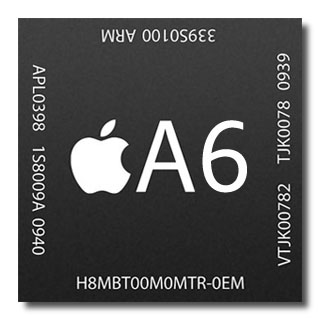
The chipset is what kind of chip its using, this usually means brand and such so you don't really have to consider that, but just in case you're wondering, the really good ones are Qualcomm Snapdragon and Apple of course have very good chips, most Samsung devices now have their own processors and such. Some chips are of the same speed and cores but a better chipset would work more efficiently translating to a smoother, faster experience. 


The one you should be paying more attention to are the CPU and GPU. Each standing for Central Processing Unit and Graphics Processing Unit respectively. Although its not always the case, you can initially tell how fast the processor is by two things, the number of cores and the clock speed. Just look at the picture up there, the Sola has a dual core (2 cores) processor that is clocked at 1GHz, and the iPhone has a dual core processor clocked at 1.3GHz. So you can roughly assume that the iPhone would be faster than the Sola. Now I do want to stress on how this is not necessarily true but it is useful to get a rough estimation on how fast the phone would perform. A good example of this is the iPhone 5 has a dual core 1.3GHz processor but the Samsung Galaxy S4 has a octa core 1.9 processor (it means it has 8 cores). But they both run smoothly nevertheless. 

How do you imagine cores, well, a good example is imagine the storage of the phone as a library, and the processor with cores are people reading books to operate the system. To operate, they need to learn how to operate the phone by reading. So more cores means you have more people to read and that would make operating the phone much smoother and faster. But how come some phones with less cores can still run smoothly? Well, that comes down to software optimization, take it this way, remember when you're doing assignments and you'll have to look for information, browsing page after page after page just to get suitable information about something, wouldn't it be easier if all that information was just in one single page? It's the same concept, an optimized operating system would be just one book with labels but an operating system that isn't optimized would probably take several books.


The clock speed is how fast the person (core) can read, so logically a faster processor would work faster (duh!).


A graphics processor is a processor made specifically to handle graphic heavy tasks like games. So having a graphics processor would always be better as your games run more smoothly. This does have an impact on your battery life as you're running two different processors.

Now, you know what the processor cores and clock speed mean but what exactly is enough, well, based on the verge I think, the minimum standard for 2013 is a dual core 1GHz processor.

Next is RAM (Random Access Memory),


Dig a little bit into the picture, you see the 512MB RAM under internal, well, as I have explained before the processor works by digging through a library and then reading to operate the phone, now having to dig through the library all the time would be a little too inefficient right? So that's why you have RAM, RAM is the amount of books the people (collectively) can hold, meaning the readers don't have to walk back to the bookshelves to learn to operate something they have just read about. One of the reasons your phone lags is that the RAM is full, and those poor people have to walk back to the bookshelves to return the books. So, evidently, more RAM would save those people from having to go back to return the books, which ALL translates to (the same) a smoother and faster experience.


The 8GB is how much of storage the phone has and the card slot above that, means you can expand the phone's storage via microSD. As you can see, the iPhone's storage cannot be expanded.

The last is Display, other features are pretty easy to understand and those features would also be pointed out to you by those people at the shop who like to follow you around.


Yea, THOSE people


The key things you should look into for a display would be the type of display, like LCD and AMOLED, the size, 3.7 inches, 4.0 inches, and the pixel density. These all sound very "technical" but they're actually very easy to understand once you know what they actually mean.

Don't worry I'll walk you through it, ok, first is LCD and AMOLED, there are other kinds of displays, the subcategories of them actually, but if you know about these two in general, you kinda already get the picture. Both these phones use LED-backlit LCD screens, the only difference is that the iPhone uses an IPS display. LED backlit means, the phone has a layer of white LEDs that is covered by an RGB (red, green, blue) filter, like so


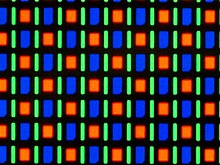
If you look at your display using a microscope, it should look like this,


Looking at the picture above, you'll see three different coloured squares that repeat themselves, red green and blue, those are called subpixels that cover one white LED. These make one pixel, and if you've learned science before, you'll know the human eye senses the red, blue and green in different shades and combinations to form every colour you look at.

So the difference between LCD and AMOLED are, LCD screens use a backlight to produce the three colours, because white light is made up of seven colours, red, orange, yellow, green, blue, violet and indigo. The subpixels filter out the red, green and blue from that white light to recreate colour. AMOLED screens, however, do not have a backlight, but instead each subpixel is an LED itself.


AMOLED screen pixel arrangement

But because the AMOLED screen uses real LEDs for each colour, they would have to be arranged in this way as LEDs are bigger than filters. What does this mean? An AMOLED display will never be as sharp as an LCD display, because it only has two subpixels per pixel compared to three subpixels on the LCD display.

The reason AMOLED screens are used is because AMOLED screens produce more punchy and vivid colours compared to the realistic colours on the LCD display. That's why Samsung phones have very punchy colours. AMOLED screens also reproduce perfect blacks. Okay, so bottom line is, if you want bright, punchy, deep blacks and vivid colours, go for an AMOLED display, but if you like looking at a more realistic, paper-like display and a sharper screen, go for LCD displays instead.

Also if you're wondering what does IPS means, its a higher quality display that is supposed to have better viewing angles, meaning colours won't fade or shift when the screen is viewed from the side and not head on. SUPERLCD is another higher quality display which is found on the HTC One, both the iPhone and HTC One have great viewing angles and paper-like displays.

The next thing you should consider is the screen size, I'm not sure about smaller hands, but the screen size appreciated by many ranges between 4.3 to 4.7 inches, so if you frequently type on your phone, you should opt for a screen size within that range. There are of course phones with bigger screens, like the 5 inch Xperia Z, Samsung S4 and even bigger screens of the Z Ultra (6.4 inches) and Note (5.7 inches). These would of course be easier to type on but this size does not aid one handed use.


iPhone 5 (4 inch), Samsung S4 (5 inch) and HTC One (4.7 inch)


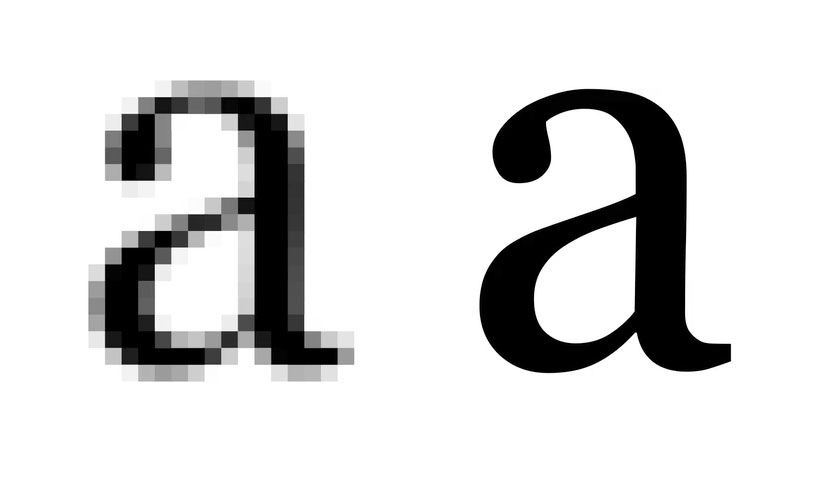
The last is pixel density, pixel density is the amount of pixels the screen has, the more pixels on the screen, the sharper the images on the screen would look. So if you want to have more information displayed on one page on your phone, a sharper screen would make all the fine details visible on your screen, the fewer the amount of pixels, the less sharp things would look and you won't be able to read small font on webpages without zooming in.


More pixels per inch


More pixels make the image sharper


Like so

Now, Apple has coined Retina Display, and this means that your eyes won't be able to make out each individual pixel anymore. The retina display has a pixel density of 326 ppi (pixels per inch). The rough estimation of pixel density is as follows, WVGA resolution has 200++ ppi, 720p or HD screens have around 300++ ppi, and 1080p or Full HD screens have 400++ppi. Depending on your needs, you should be able to gauge how sharp you want your screen to be based on these numbers.

If you want to browse webpages without having to zoom in all the time, then get a higher resolution screen, but you you just want to handle simple tasks on your phone, a lower density screen wouldn't matter, the same goes for movies and media.

Hopefully this post will help you understand what the specifications on the phone box means now and will help you decide which phone is better without having to read reviews and opinions online. I hope this was helpful and I shall end the post here~